

Welcome back! In Part 1, we covered the history of pickleball, the “pop-pop-pop” sounds, and the infamous Kitchen rule. If you’ve mastered those basics, you’re halfway to becoming a pickleball pro.
But before you head to the courts, there are a few more essential pieces to the puzzle. In this second installment, we’re breaking down the trickiest rules for beginners.
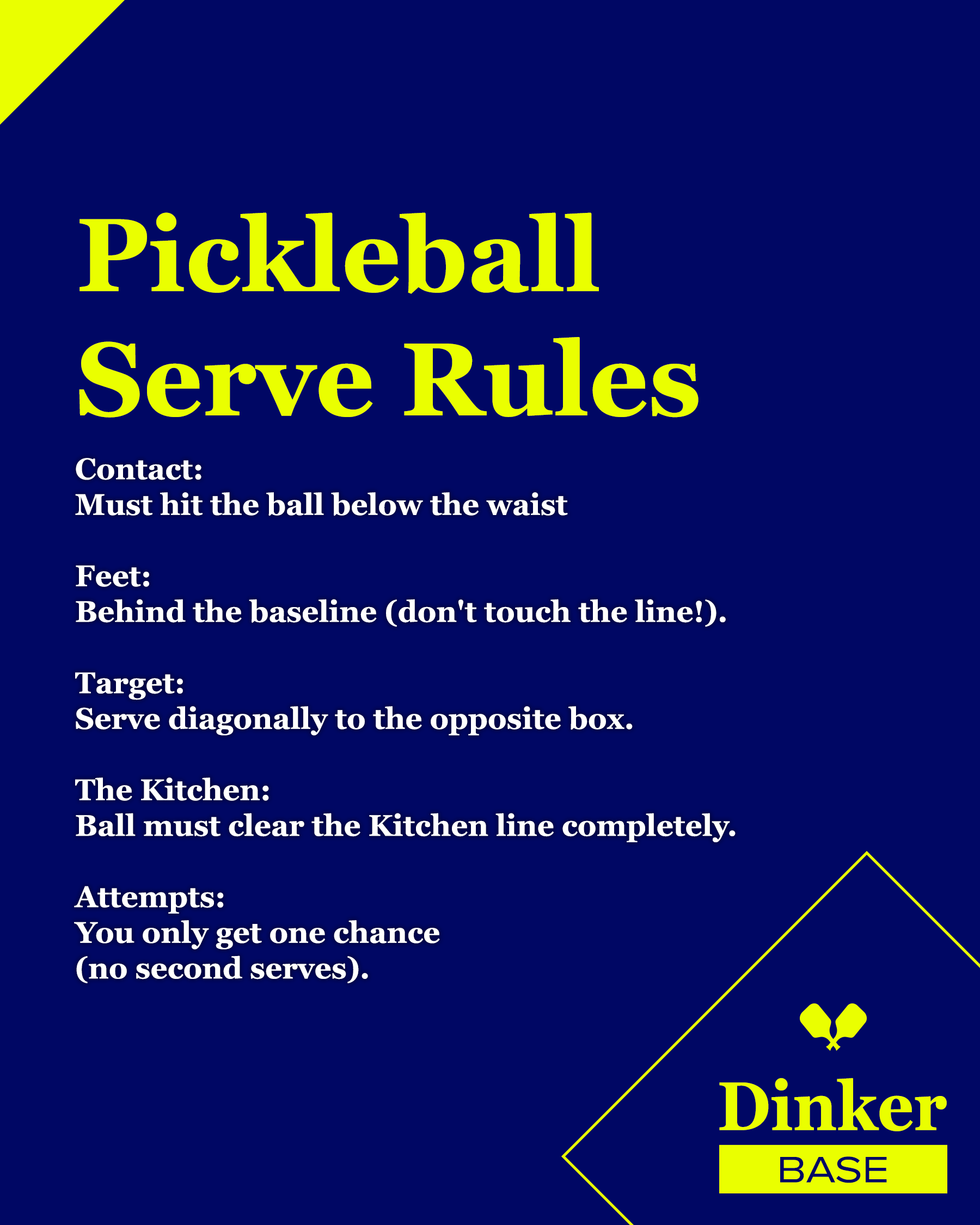
Pickleball Serve Rules
To execute a legal serve, you must strike the ball below your waist with an underhand motion. Keep your feet behind the baseline—be careful not to touch the line! Your goal is to hit the ball diagonally into the opponent’s service box, ensuring it clears the Kitchen line completely. Remember, unlike tennis, you only get one attempt to get the serve in; there are no second serves.
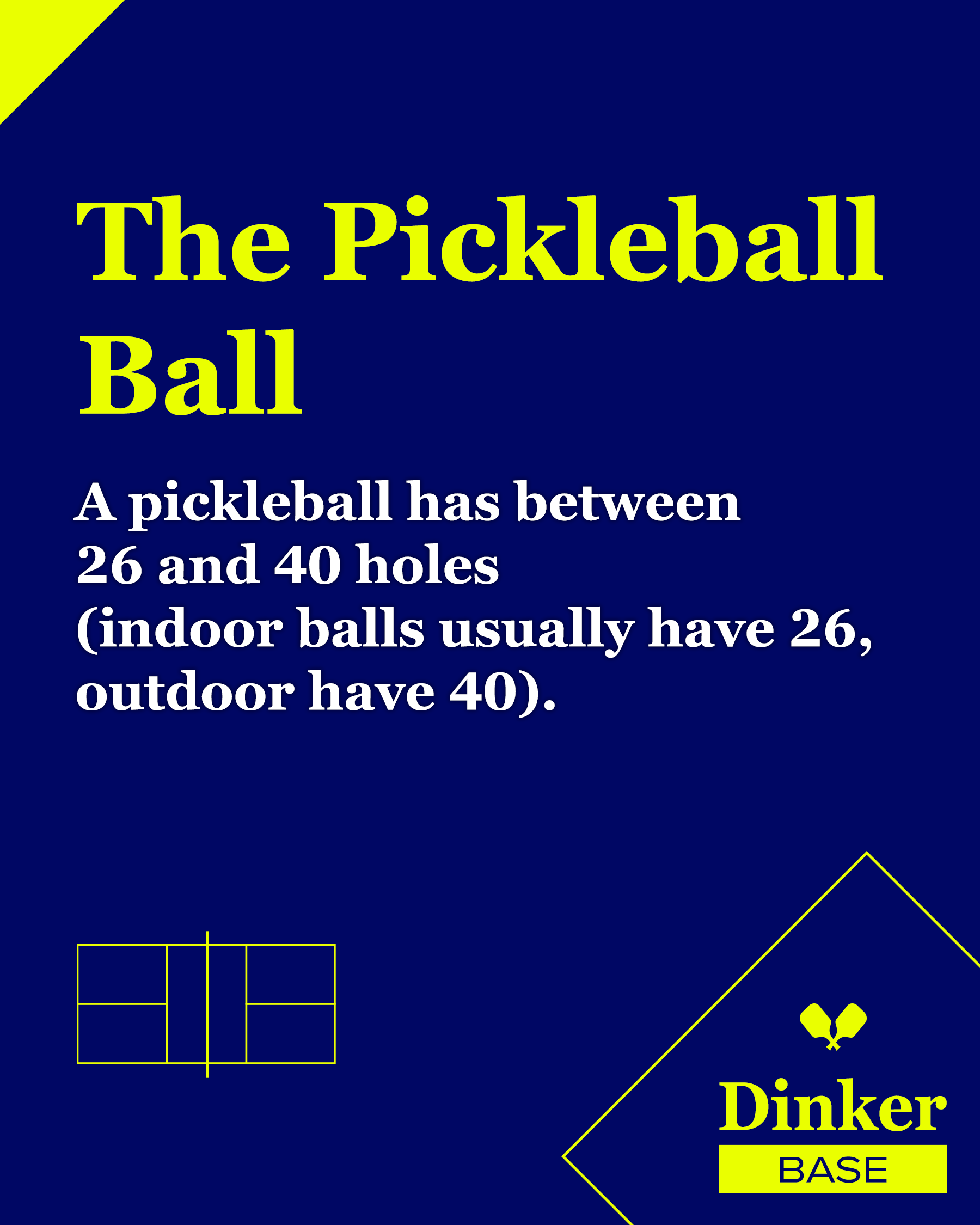
The Pickleball Ball
Unlike tennis balls, pickleballs are made of durable plastic and are defined by their unique pattern of holes. A standard ball will have between 26 and 40 circular holes, which affect how it flies through the air. There is a key difference to look out for: indoor balls typically have 26 larger holes for a softer feel, while outdoor balls usually have 40 smaller holes to withstand the wind and rougher court surfaces.
The “Two-Bounce Rule” Explained
If the “Kitchen” is the most famous rule in pickleball, the “Two-Bounce Rule” is the most commonly forgotten by beginners. But don’t worry, it’s simpler than it sounds.
Basically, the ball must bounce twice before anyone can smash it out of the air (volley).
- Bounce 1: When the server hits the ball over the net, the receiving team must let it bounce before hitting it back.
- Bounce 2: Here is the catch—the serving team also has to let the return shot bounce before they can hit it.
Once those two bounces have happened (one on each side), the “open play” begins, and you can choose to volley the ball out of the air or let it bounce. This rule exists to extend the rally and prevent the serving team from instantly smashing the return.
Sizing Up the Court
One of the reasons pickleball is so accessible is the court size. If you’re used to tennis, a pickleball court will feel much more manageable.
- The Dimensions: A standard pickleball court is 20 feet wide by 44 feet long. This is the exact same size as a doubles badminton court.
- Singles vs. Doubles: Unlike tennis, which has wider “alleys” for doubles play, pickleball uses the same court size for both singles and doubles.
- The Lines: You have your sidelines, baselines, centerline, and of course, the non-volley zone line (the Kitchen line) we discussed in Part 1.
Because the court is smaller, there is less running than in tennis, but don’t be fooled—the quick reflexes required will still give you a great workout!
Ready to Play?
Now you are armed with the history, the scoring, the Kitchen rules, and the Two-Bounce rule. There is only one thing left to do: Get out there and play!
Pickleball is known for its friendly, welcoming community. Don’t be afraid to show up to your local courts, introduce yourself, and ask to rotate in. You’ll be “dinking” like a pro in no time.